Umm Qais Travel Guide – Roman Ruins in Jordan
Looking for some of the more hidden gems in Jordan often leads travelers to Umm Qais, the site of an ancient city. Located in the northern part of Jordan, near the Syrian and Israeli borders, Umm Qais is best known for its well-preserved Roman ruins. This ruined city was an important part of the Roman Empire outside Italy, and today, offers an incredible glimpse into the ancient. In this guide we’ll cover the best things to see in Umm Qais, nearby points of interest, how to get there, and where to stay.
Umm Qais, known in ancient times as Gadara, was one of the cities of the Decapolis—a group of ten cities on the eastern frontier of the Roman Empire. It holds a unique place in history, not only because of its strategic location but also due to its role as a cultural hub during Roman times. The city was an important center for philosophers, poets, and writers, often attracting the intellectual elite of the era.
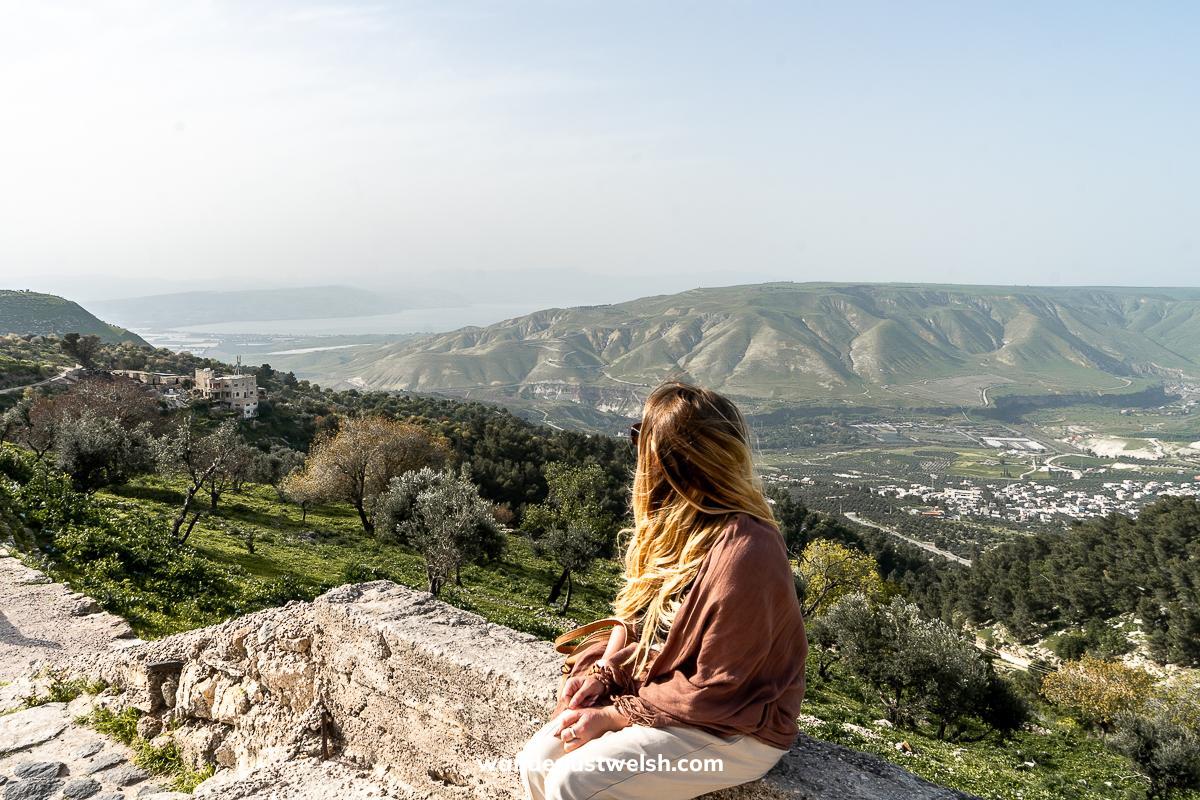
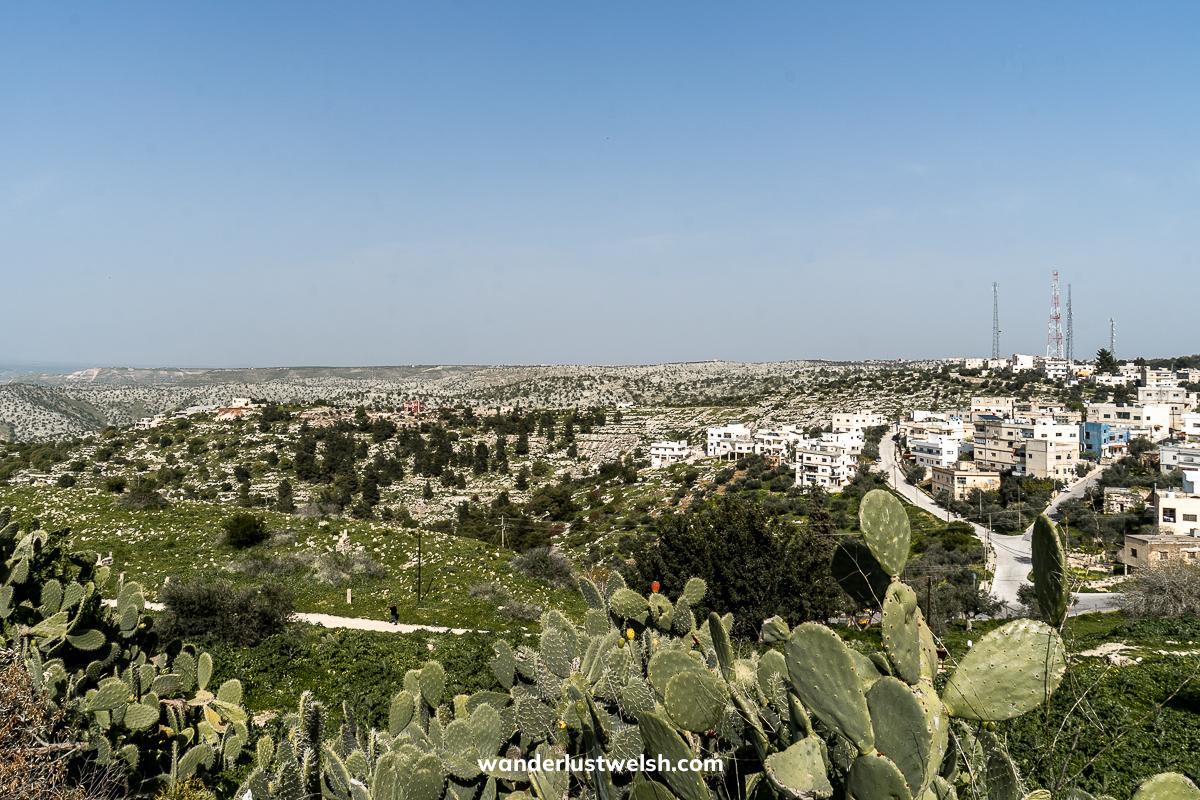
The ruins of Umm Qais are perched on a hilltop, offering stunning panoramic views of the surrounding landscape, including the Sea of Galilee and the Golan Heights.
Things to See in Umm Qais
There’s a lot of landmarks to explore in Umm Qais, here are some of the highlights you shouldn’t miss.
West Theatre
The West Theatre is the most impressive structure in Umm Qais. Built in the 2nd century AD, this Roman amphitheater could once hold up to 3,000 spectators.
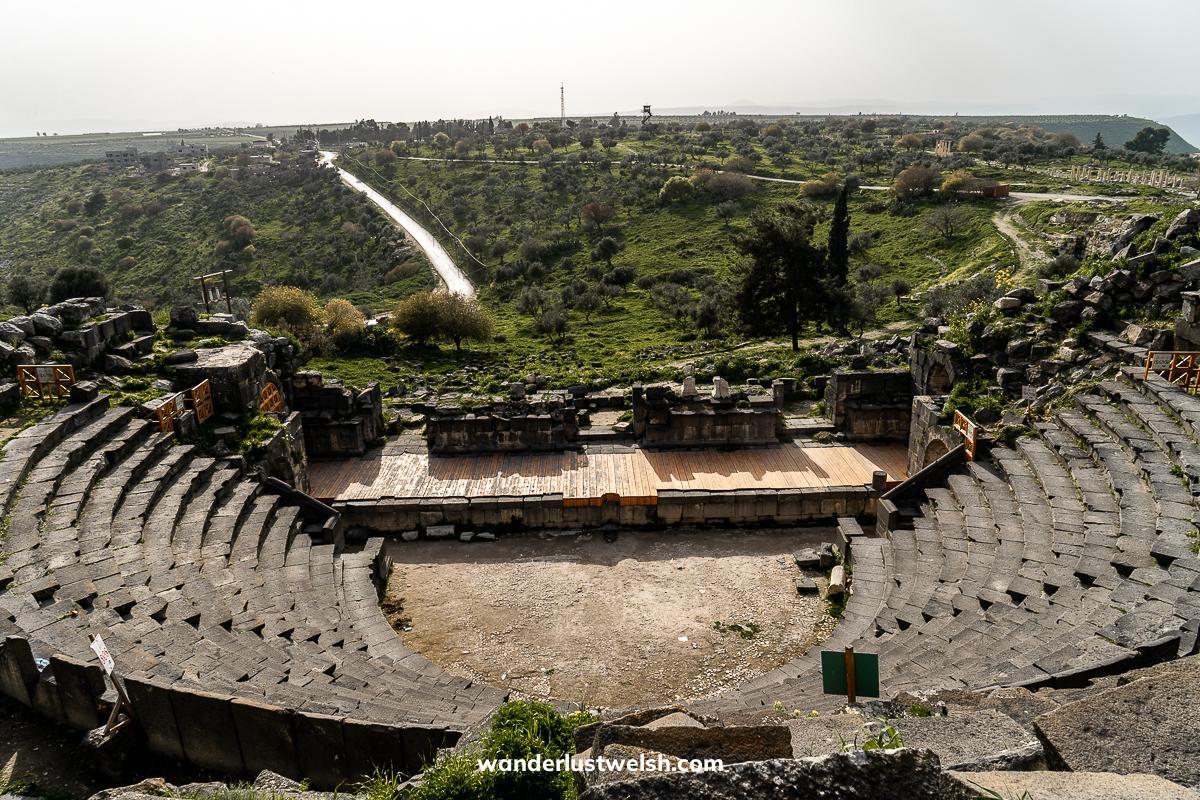
It was constructed using black basalt, which gives it a distinctive appearance compared to other Roman theaters built in lighter colored limestone.
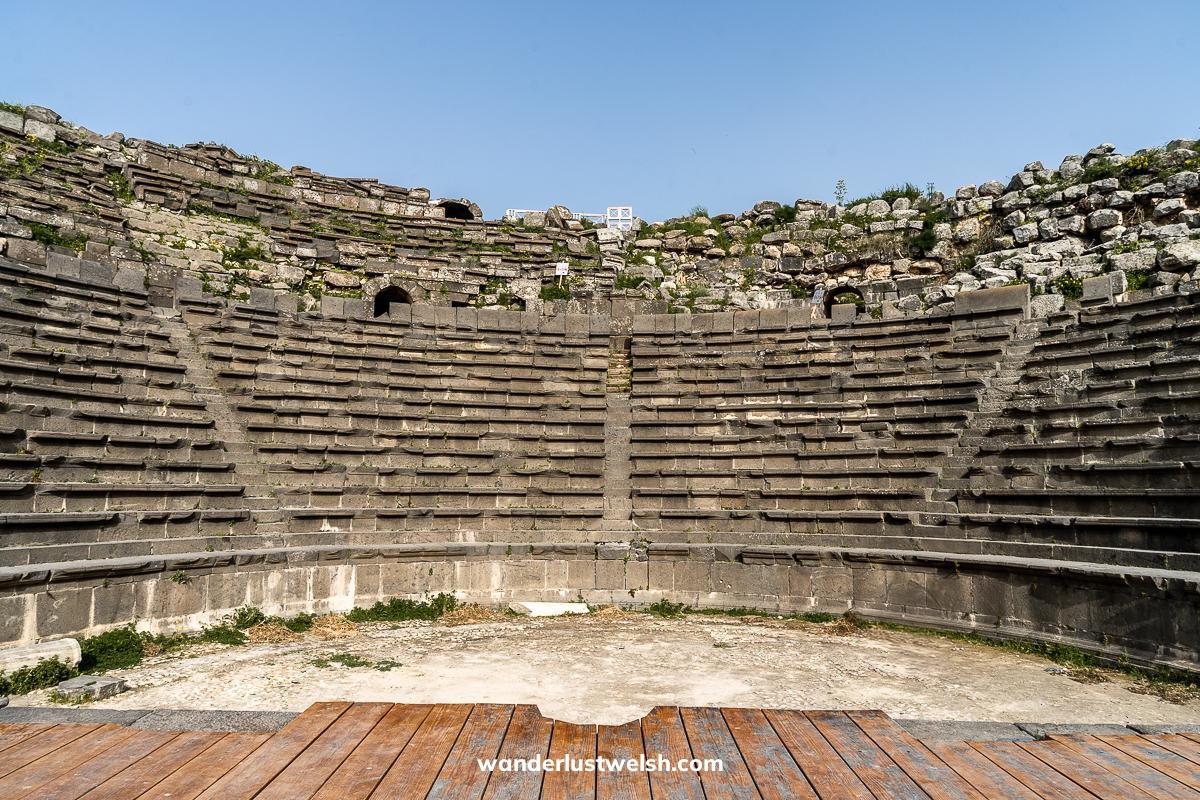
The theater was designed for plays, musical performances, and political gatherings, and its acoustics are still remarkable today. When standing on the stage, you can easily hear your voice resonate around the entire structure, a testament to the engineering skills of the ancient Romans.
Cardo Maximus
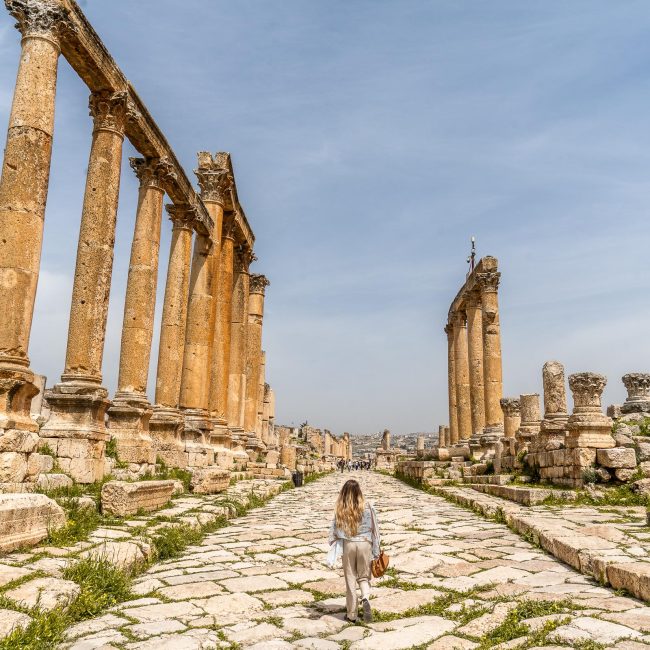
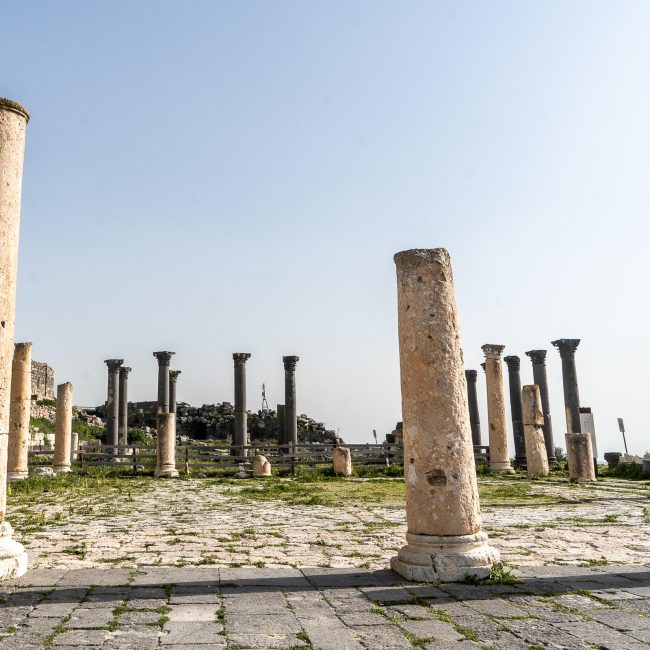
The Cardo Maximus was the name given to the main street of Roman cities, and Umm Qais is no exception. This grand street lined with columns once ran through the heart of Gadara, lined with shops and public buildings.
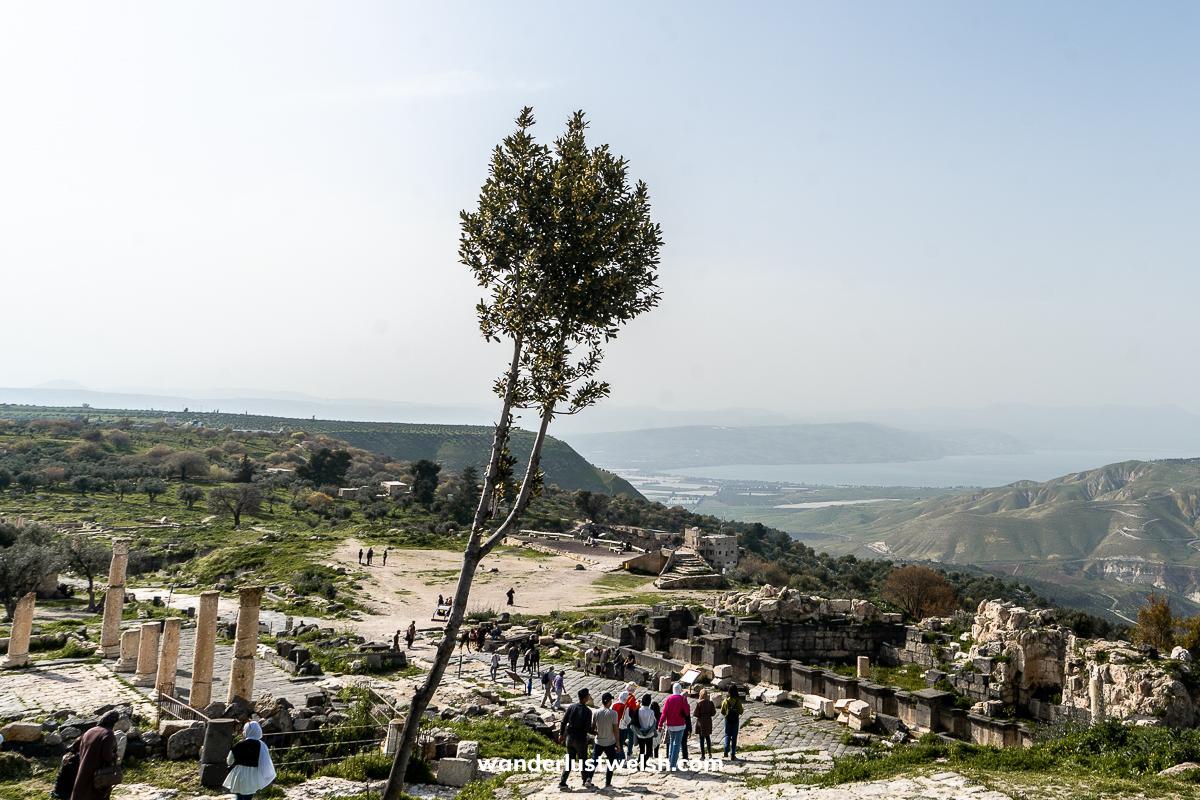
Walking down the Cardo Maximus, you can imagine the hustle of daily life in ancient times, with traders selling their goods and locals going about their business. The columns remain standing, giving you a sense of the grandeur that this central thoroughfare once had.
Nymphaeum
The Nymphaeum in Umm Qais is another remarkable site. Nymphaea were huge fountains dedicated to the nymphs, nature goddesses in Greek mythology.
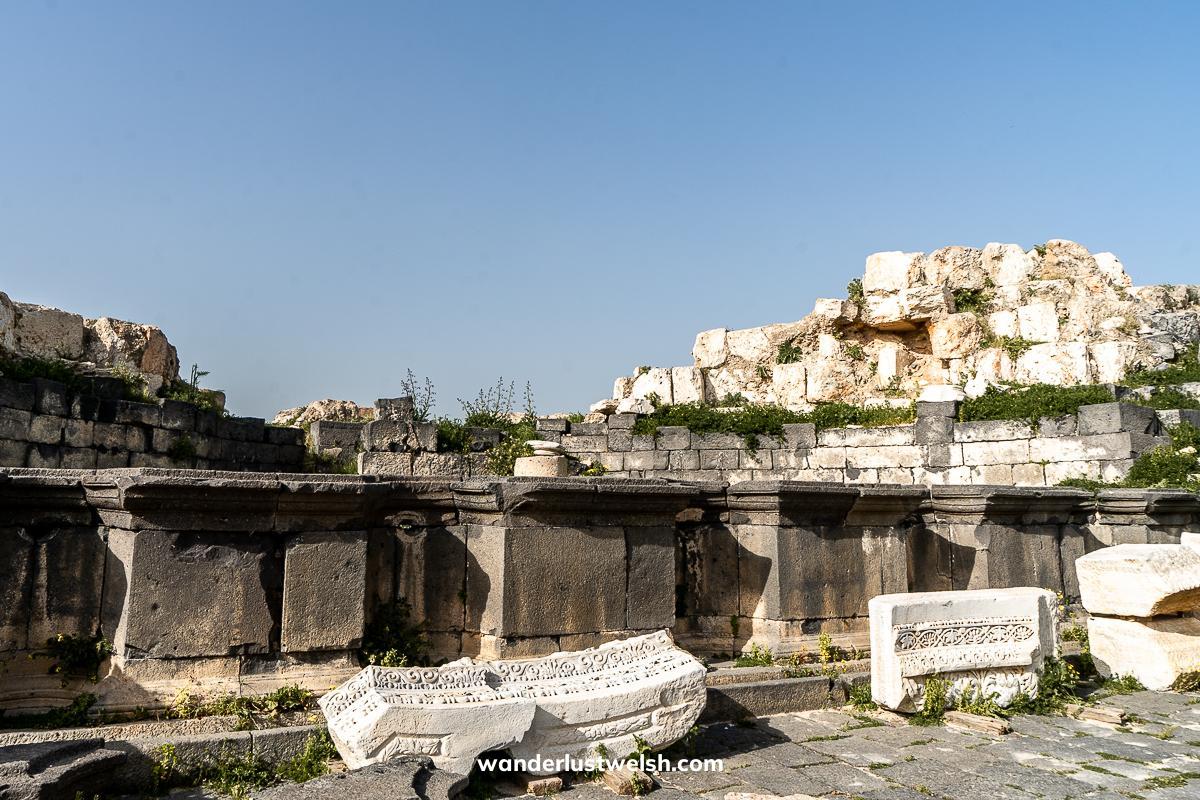
Despite the Nymphaeum in Umm Qais being heavily damaged you can still see the intricate details etched and carved into it. Water was essential for the survival of a city, and the Nymphaeum served as a gathering place for locals to collect water and socialize.
Basilica Terrace
The Basilica Terrace is a large open space where a Byzantine church once stood. The basilica was built atop the ruins of a Roman temple.
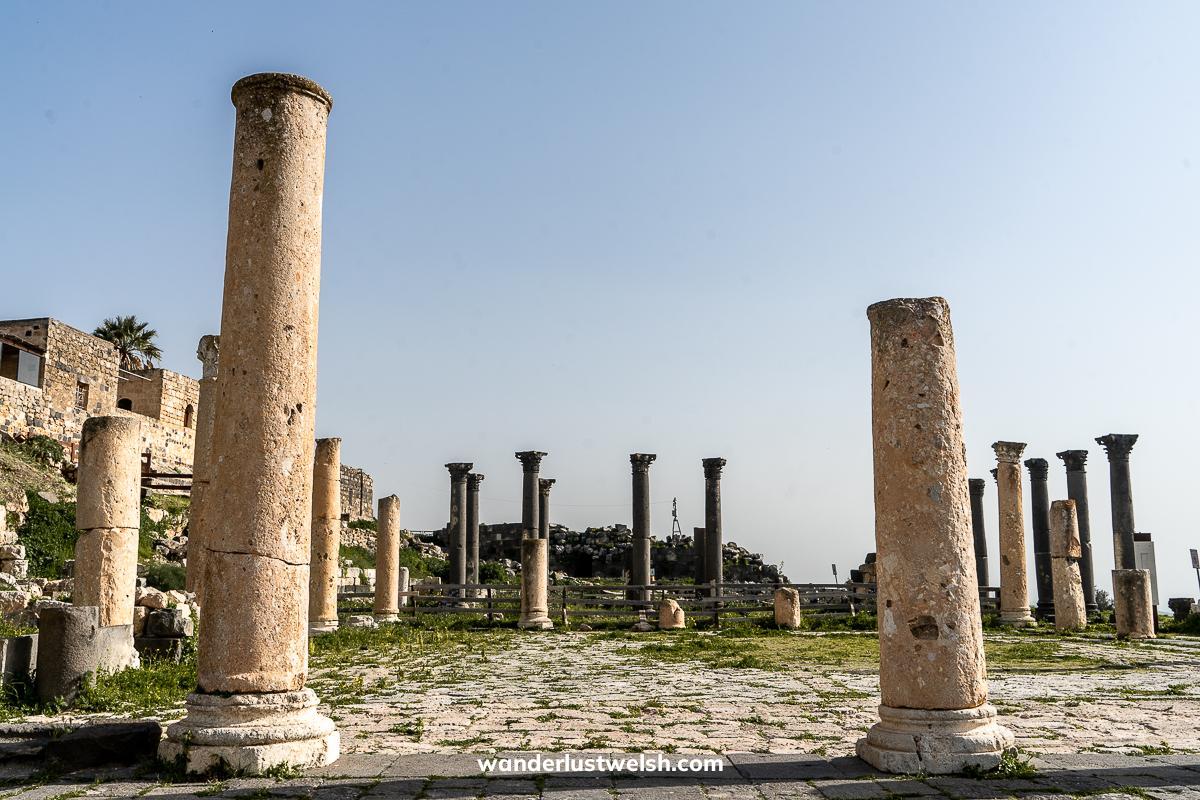
Although the basilica itself is mostly in ruins, the terrace offers a commanding view of the surrounding countryside, and you can still see the outlines of the church’s columns and the mosaic floors that adorned it.
Mausoleum
Another significant site in Umm Qais is the Mausoleum. This underground burial chamber was constructed during the Roman period and served as the final resting place for prominent families in the city.
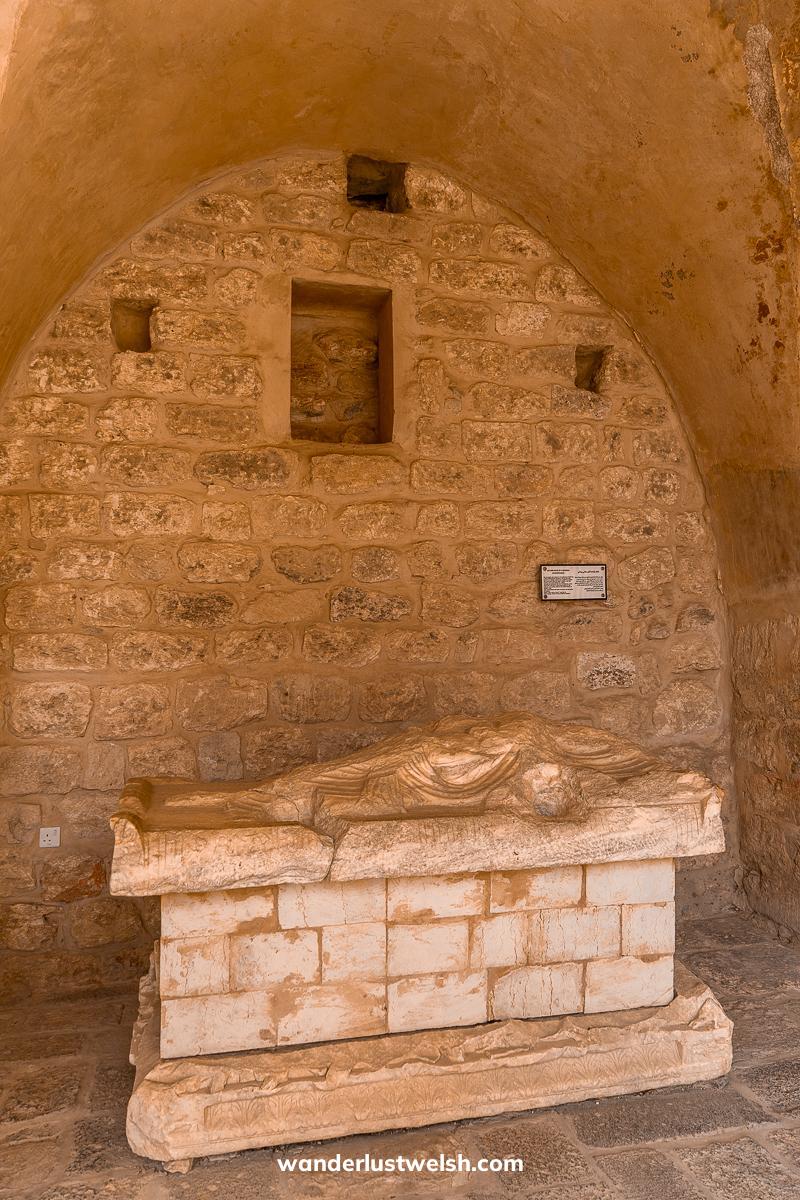
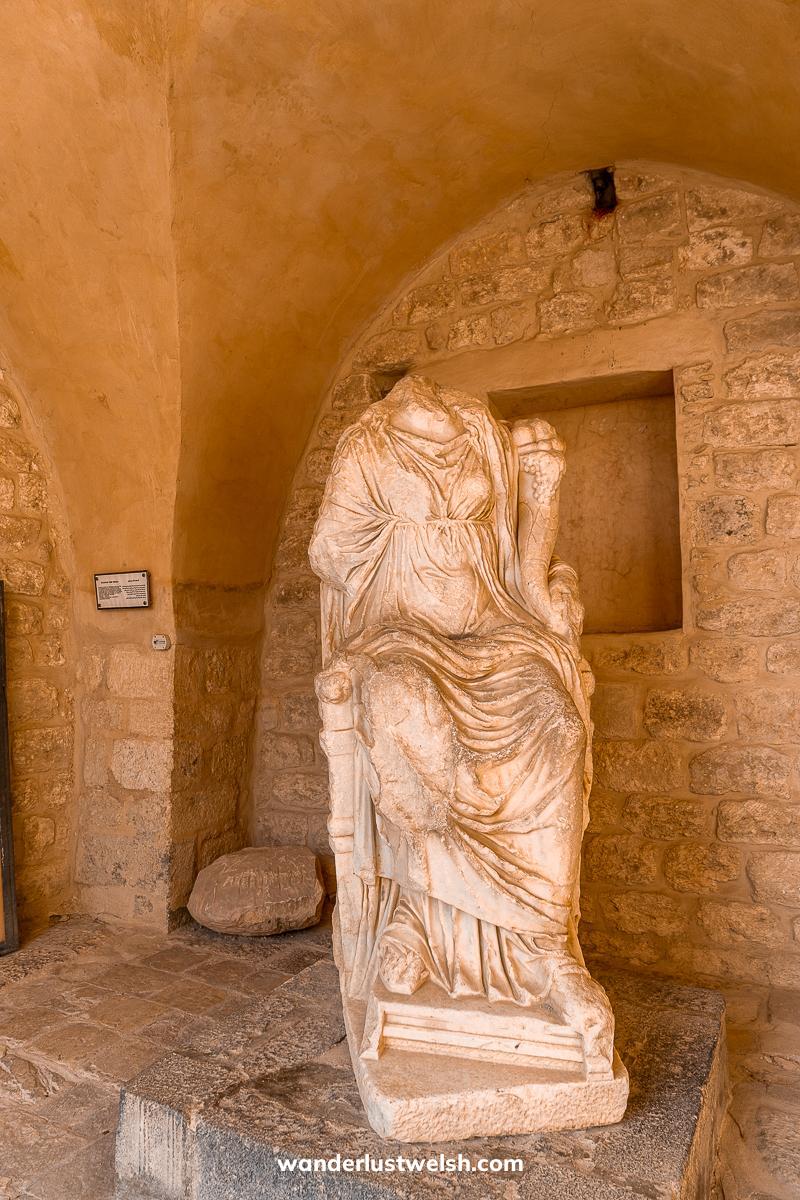
The Mausoleum, with its carefully carved tombs and statues, offers insights into how the ancients honored their dead.
Thermae
The Thermae, or public baths, were a vital part of Roman social life. These baths were not just places for bathing but also centers for social interaction, business meetings, and relaxation.
The remains of the Thermae’s foundations in Umm Qais give you an idea of how the baths were structured, with separate areas for hot, warm, and cold baths, as well as spaces for exercise and massage.
Views of the Sea of Galilee
One of the highlights of a visit to Umm Qais is the breathtaking view of the Sea of Galilee—a place of great significance for Christianity. From the hilltop ruins, you can look out across the Jordan Valley to the distant waters.
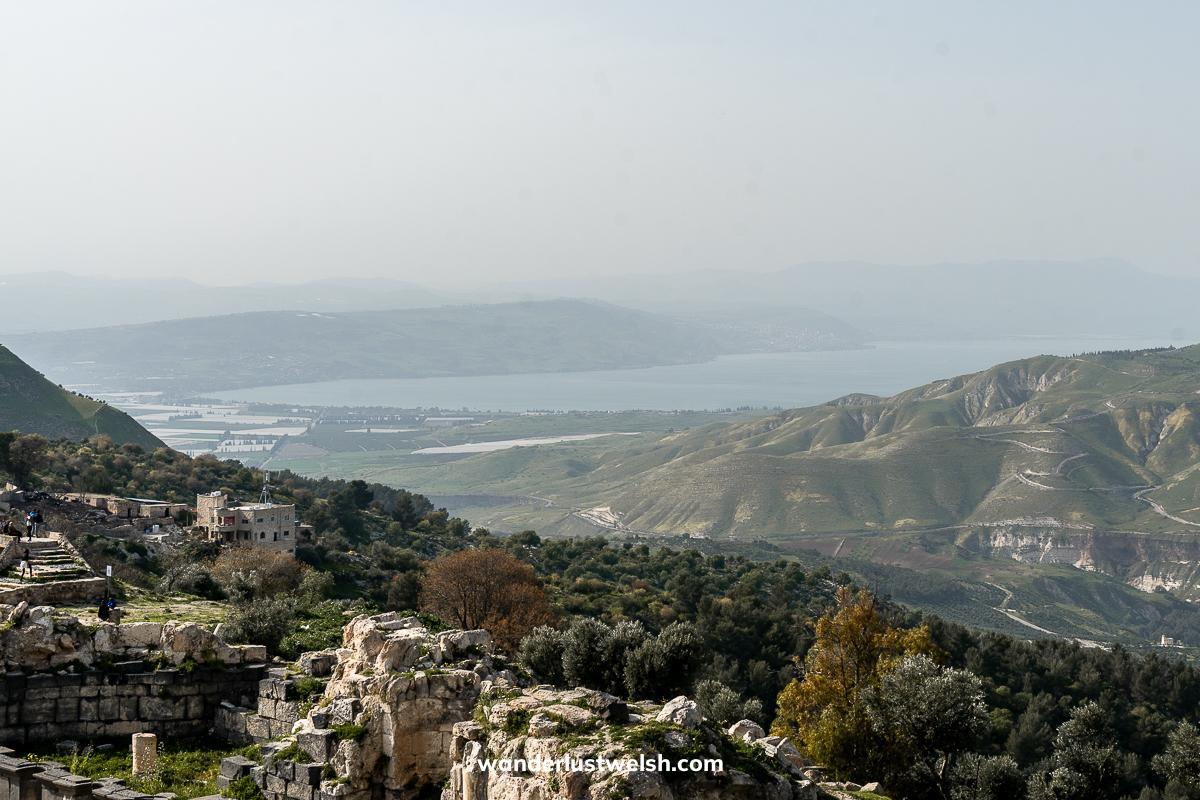
There’s an outdoor restaurant with a terrace offering this amazing view. They serve local Levantine dishes like hummus, baba ghanoush, falafel, and tabouleh. It’s a great place to stop for lunch or dinner while you’re here.
Places to Visit Near Umm Qais
The star attraction of this region is the better-preserved ruined city of Jerash. And another nearby option is the Muslim castle of Aljoun. Together with Umm Qais, the trio make for a perfect day trip from Amman.
Jerash
Jerash is one of the best-preserved Roman cities in the world and is located midway between Umm Qais and Amman. Often referred to as the “Pompeii of the East,” Jerash boasts an impressive array of ruins, including the grand Oval Plaza, the Temple of Artemis, and the North and South Theatres.

Walking through Jerash is like stepping back in time, with its column-lined streets, arches, and grand temples. The city was a major trading center during the Roman Empire and offers a deeper understanding of the region’s importance in antiquity.
Ajloun Castle
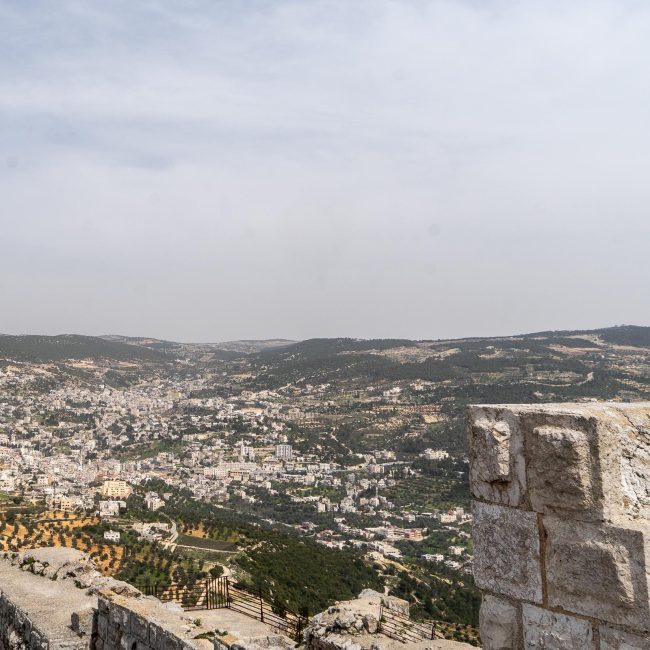
Ajloun Castle, located about 40 minutes from Umm Qais, is only a short detour on the journey from Jerash. Built in the 12th century by the Ayyubids to defend against Crusader attacks, it’s a striking example of Islamic military architecture.
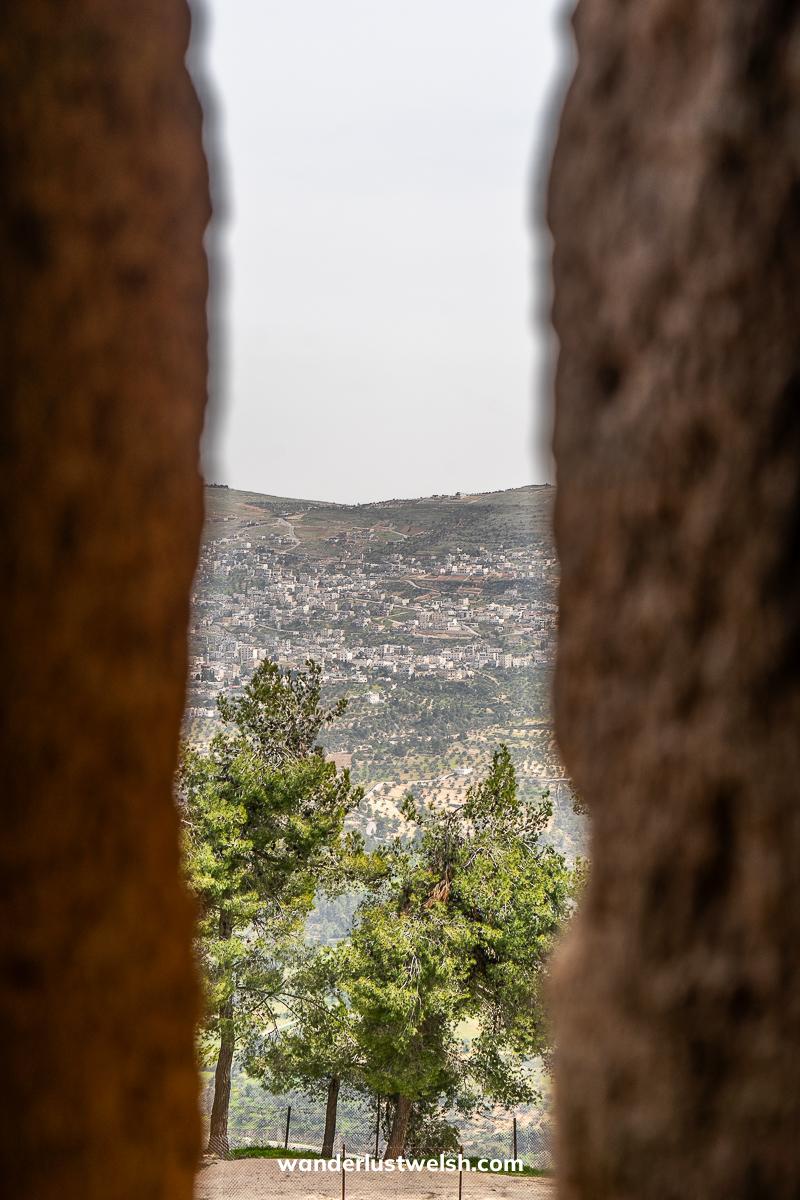
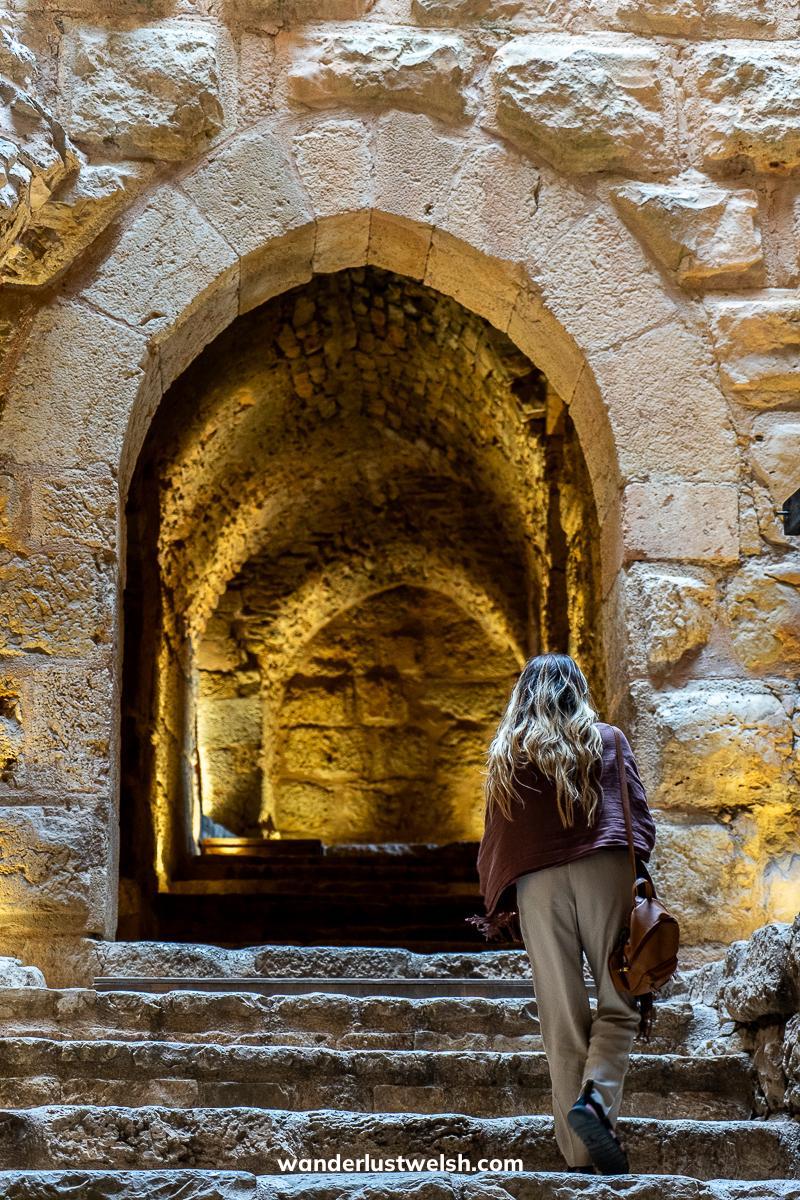
The castle offers panoramic views of the Jordan Valley and the surrounding hills. The castle’s strategic location and well-preserved state make it a fascinating site to explore. You can wander through its corridors, climb its towers, and learn about the battles and sieges that took place here.
Where to Stay in Umm Qais
While Umm Qais itself offers a few accommodation options, you should consider staying in Amman, and planning a day trip from there. Amman provides a wider range of hotels to suit different budgets, from luxury to budget-friendly options.
Luxury: The St. Regis Amman is a top choice if you’re looking for luxury. The hotel features elegant rooms, a world-class spa, and fine dining options.
Mid-Range: For a mid-range option, the Landmark Amman Hotel & Conference Center is a solid option. With spacious rooms, a variety of dining options, and a rooftop pool with panoramic views of the city, it’s good value for money.
Budget-Friendly: For those on a budget, Zaman Ya Zaman is a good choice. It’s centrally located and even has views of the Roman Amphitheatre from the rooms.
How to Get to Umm Qais
If you’re thinking about renting a car in Jordan, then driving is the easiest way to get to Umm Qais. It’s around a two hour north of Amman, and the roads are pretty good, though the traffic is heavy.
If you won’t be driving, then the next best option is to book a private tour from Amman, with options to add Umm Qais, Jerash, and Ajloun Castle.
Best Time to Visit Umm Qais
The best time to visit Umm Qais is during the spring (March to May) or autumn (September to November) when the weather is mild. Coming during these months means avoiding the extreme heat of summer or chill of winter.
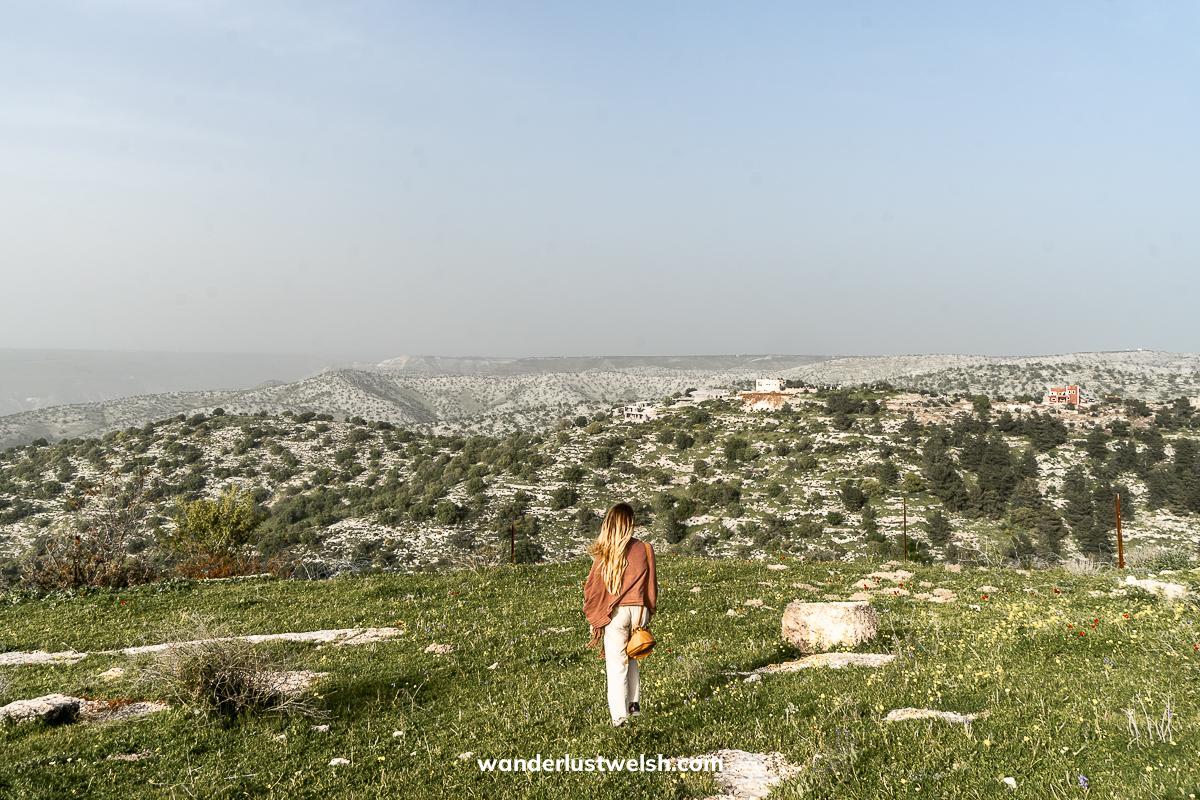
Spring is a particularly beautiful time to visit, as the surrounding hills are covered in wildflowers. We went in April and the weather was perfect.
Umm Qais FAQs
Is Umm Qais Worth Visiting?
Absolutely! Umm Qais is worth visiting for its rich history, stunning ruins, and breathtaking views. It offers a unique glimpse into the ancient world, blending natural beauty with cultural heritage.
How Much Time Do You Need in Umm Qais?
You should plan to spend at least 2 hours exploring Umm Qais. This gives you enough time to see the main sites and enjoy the views. If you stop for a meal at the outdoor restaurant then add another hour or two.
What to Wear in Umm Qais?
With Jordan being a conservative Muslim country, you should dress modestly by covering your shoulders and knees. Long pants or skirts and shirts with sleeves are appropriate for both men and women. Summers and even late spring/early autumn can get very warm, so lightweight fabrics are better.
How Old is Umm Qais?
Umm Qais dates back to the 3rd century BC. It became a significant city during the Roman period, around the 2nd century AD, and has since witnessed various historical phases, including Byzantine and Ottoman.
Umm Qais Travel Guide – Roman Ruins in Jordan
Don't Forget to Pin it for Later
More Jordan Travel
Find more of our Jordan travel guides below:
-
Umm Qais Travel Guide – Roman Ruins in Jordan